The India vs England cricket match is amongst the most watched matches in international cricket. When these two teams get together, the fans follow the scorecard, the performance of the batters, the figures of the bowlers, the partnerships, and the final result.
So what does a scorecard of India vs England mean? What does the scorecard tell fans about the full match, and what are the key figures? The India vs England match scorecard provides all the information one requires to understand the match report, and this guide explains everything!
What Does an India vs England Match Scorecard Contain?
India vs England match scorecard offers a comprehensive breakdown of the match. It can be used in various formats, and it may contain innings totals, individual batting scores, bowling figures, fall of wickets, partnerships, extras, and the final score.
A test match will usually require four innings as both teams will bat twice. In the ODI or T20 international, the two sides play a single innings each.
The scorecard thus becomes a statistical summary of the entire game.
What Kind of Information is Provided on India Batting Scorecard?
Indian batting section contains a list of all the Indian batters who played in the run-up.
Typical columns in an important scorecard include:
- Batter’s name
- Runs scored
- Balls faced
- Number of fours
- Number of sixes
- Strike rate
- Dismissal information
The scorecard also records whether the batsman got bowled, caught, run out, stumped, or dismissed in any other manner.
This section enables fans to easily determine the highest scorer in the Indian team and whether the team bats aggressively or not.
What Information Is Shown in the England Batting Scorecard?
The England scorecard for the batting is basically the same format.
It offers information on all England batsmen such as runs scored, balls faced, boundaries, strike rate, and how they are dismissed.
The section is designed to assist fans in determining whether England had a few big scores or a number of different players made runs.
The strike rate is very helpful in limited-overs cricket, as it shows the speed at which a batter scored.
What are the Bowling Figures?
The bowling line-up of India vs England is another key factor on the scorecard.
Each bowler can have a scorecard displaying:
- Overs bowled
- Maidens
- Runs conceded
- Wickets taken
- Economy rate
- Wides and no-balls
The workload of bowlers in Test cricket can be quite different to T20 cricket. Economy rate and wickets may play a big role in T20 matches.
The bowling section provides viewers with a glimpse of the bowlers who put pressure on the batters, and which bowlers gave up the most runs.
How Does the Scorecard Show the Match Result?
The final result is usually presented following the innings information.
The result of a match may be declared an Indian win, an English win, a draw, or another official result (tie, no result).
For instance, in an ODI, the winning side is the one that accumulates more runs. The same principle goes for a T20 match.
In test cricket, outcomes can be more complex due to the factors of wickets, innings, declarations, and the time in the match.
What are the Top Numbers on the Scorecard?
Not all of the scores on a scorecard are equally important.
The most helpful statistics are the overall score, wickets taken, top scores, leading wicket takers, run rate and partnerships.
For instance, if a batter gets 100 runs, it is an important score, but it is also on the scorecard how many balls it took the batter to get to 100 runs.
Likewise, five wickets achieved by a bowler is an incredible feat, but the number of runs allowed gives some indication.
What Impact will Partnerships have on the India vs England Scorecard?
Partnerships can account for the development of an innings.
Good inter-batter communication could be vital in developing a partnership after the early wickets fall and/or in the middle and end of the innings to drive runs.
The scorecard can provide partnership information or have the option for fans to work out the contributions of consecutive batsmen.
A big partnership can prove to be one of the most significant factors in a team’s score in a close match between India and England.
So why are Fall of Wickets Important?
The fall of wickets section gives details of the wickets falling order.
Normally, it indicates the score of the dismissal and the batsman who was dismissed.
This information enables the fans to understand the way an innings went.
For example, if a team loses several wickets in quick succession, the loss of wickets can show how the innings got away from them.
If wickets are lost in the later stages of the game when a large score is already in the books, it’s a good sign that the batting side held the upper hand for much of the game.
How Does the Scorecard Differ Between Test, ODI, and T20 Matches?
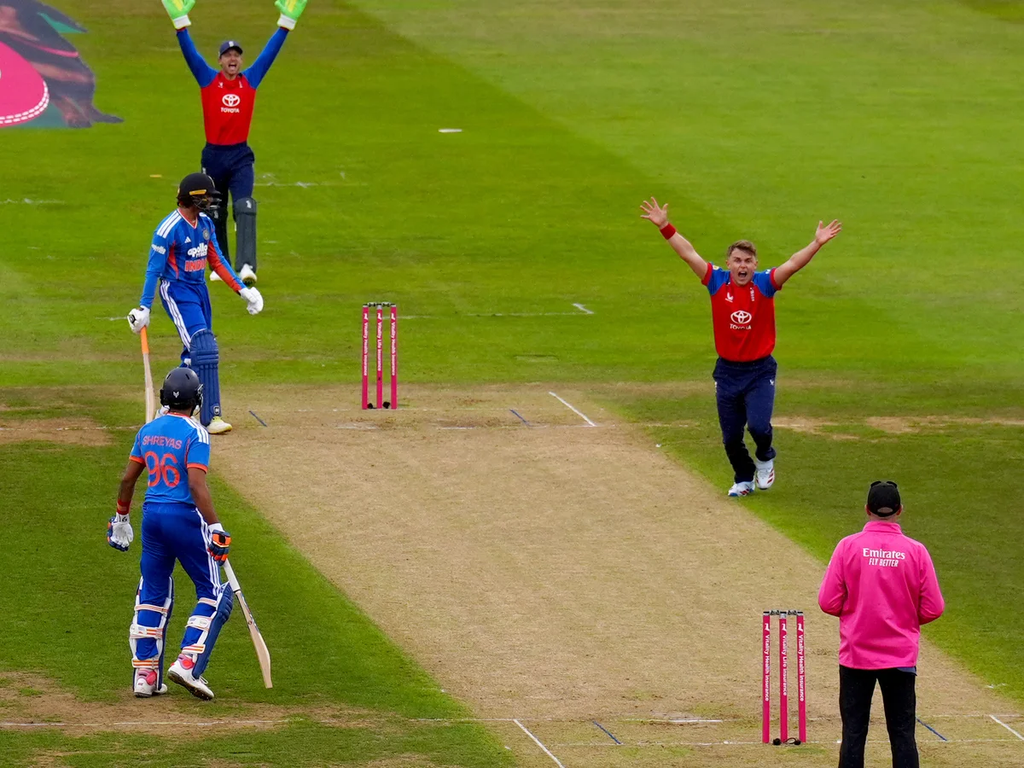
The format of a basic scorecard is the same for all formats, but the statistics are different in each.
Test Match Scorecard?
Four innings, individual bowling spells, batting pairs, declarations, and longer batting spells can be included on a scorecard if a Test scorecard is used. Time and wickets play an important part.
ODI Match Scorecard?
In an ODI scorecard, there is an innings record for two sides, each playing the opposing side for 50 overs. Some key statistics include run rate, strike rate, wickets, and death-over scoring.
T20 Match Scorecard?
T20 Scorecard – 20 overs for each team in an innings. These statistics can also be particularly significant: strike rate, boundary count, economy rate, and wickets.
How can Fans Learn From the India vs England Scorecard?
A scorecard is more than just a score.
It can be utilized to find out the maximum run-scorer, maximum partnership, maximum extras, and overall scoring pattern of the fans.
It can also be used to compare the performance of players of both teams.
For instance, two batters could get the same amount of runs but one facing a lot fewer deliveries. The strike rate is used as additional context.
Similarly, two bowlers could have bowled for the same number of wickets, but their economy rates would indicate their ‘bowling efficiency ‘.
Why Is the India vs England Match Scorecard Important?
The scorecard is a record of the match, which will be retained permanently in a statistical sense.
The news stories and highlights tell the story of the big moments, while the scorecard tells the story of the numbers.
These statistics can offer an explanation to fans, analysts, writers, and fantasy-cricket followers about the outcome of a match.
The India vs England scorecard can also prove beneficial if used to compare players and performances between various matches and series.
What is a Full Match Report and How to Read it?
First, look at the score of the match and the team totals. Then check out the best batting performances and the key bowling stats.
Then, look at partnerships, extras, fall of wickets, and the scoring rate.
Lastly, look at the two innings and explain how the game went in one direction during the first and then the other during the second.
This way, you will be able to grasp the whole match with ease, instead of only the final tally.
FAQs About India vs England Match Scorecard
1. What is the scorecard of India vs England match?
Cricket scorecards, match information, player statistics, and results are generally available in detail from established cricket-statistics websites and official cricket boards.
2. What is implied from the India vs England scorecard?
A scorecard will list team totals, individual batting scores, bowling scores, extras and partnerships, fall of wickets, and the result of the match.
3. Are all players’ performances included on the scorecard?
Yes. A normal scorecard contains the names of bowlers and batters, and their statistics, for the innings.
4. Who has more points, the batter or the bowler?
Batting figures display runs scored and scored by the batsman; bowling figures display the number of overs, runs conceded, wickets, and economy rate.
5. What is the significance of the cricket scorecard in the game of Cricket?
Strike rate is the rate at which a batter scores runs. It becomes more crucial in limited-overs cricket like ODIs and T20Is.
6. What is meant by the economy rate?
Economy rate is the mean number of runs scored by the bowler per over. It is useful to help demonstrate the degree of control a bowler has over scoring.
7. Will the India vs England Test match be four innings long?
Yes. A Test match can have up to four innings, with both India and England potentially batting twice.
8. Why is the fall of wickets important?
It displays the score at which each wicket was lost and provides a description of the sequence of events of the innings.
9. Can the India vs England scorecard display partnerships?
Yes. Many detailed scorecards include partnership details to help the reader appreciate the role of each of two players in an innings.
10. Why is it that the complete scorecard will be a good reason for fans to attend?
The full scorecard will contain additional statistics, which may not be viewable in the final scorecard. It aids fans in comprehending each performance, team scoring trends, bowling inputs, and pivotal moments of the match.