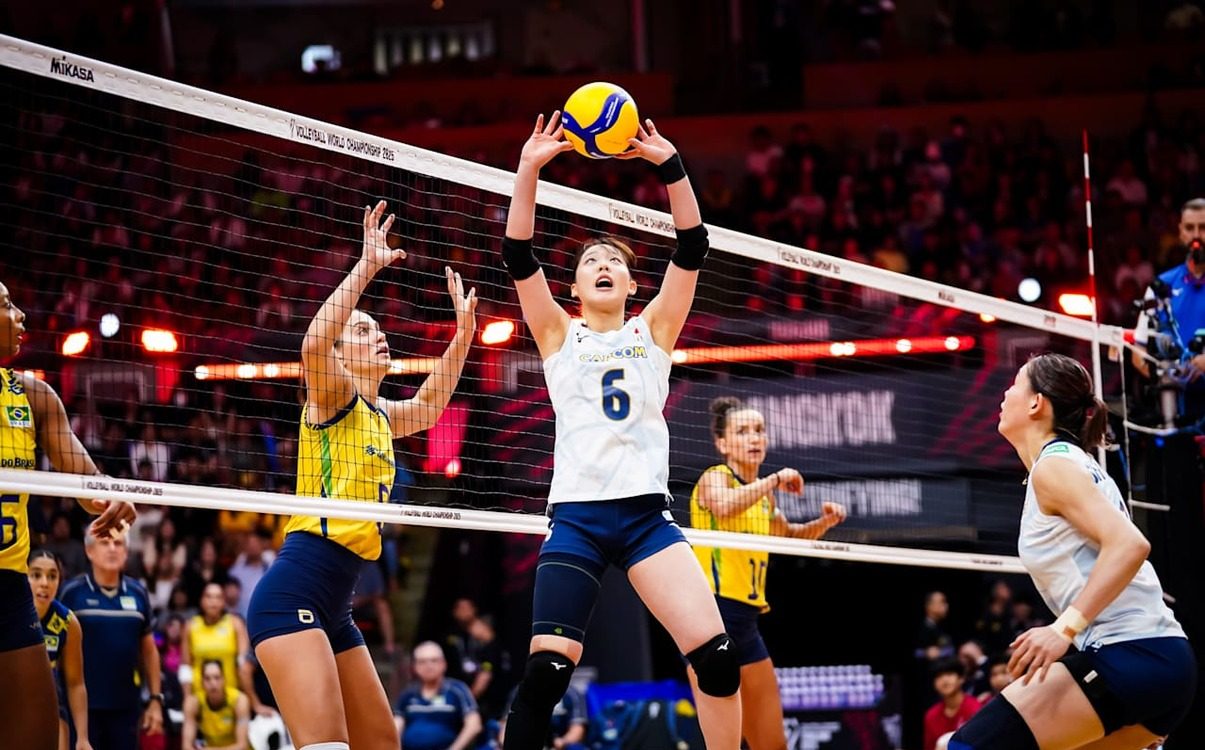
Volleyball is a popular team sport that requires communication, coordination, speed, and teamwork. One of the most common questions asked by beginners is, “How many players are on a volleyball team?” The answer depends on the type of volleyball being played. In standard indoor volleyball, each team has six players on the court at one time, while beach volleyball is normally played with two players per team.
Understanding the number of players, their positions, rotations, and responsibilities is important for anyone who wants to learn volleyball. In this guide, we explain how many players are on a volleyball team, how substitutions work, and what each position contributes to the game.
How Many Players Are on a Volleyball Team?
In standard indoor volleyball team, six players from each team are on the court at one time. Therefore, a regular indoor volleyball match has 12 players actively playing on the court—six on each side of the net.
A team can also have substitute players on its roster. The exact roster size can vary depending on the competition, league, or governing rules. Substitute players remain available on the bench and can enter the match according to the applicable substitution rules.
The six players on the court are arranged into specific positions. Three players normally occupy the front row near the net, while three players occupy the back row.
What Are the Six Positions in Volleyball?
The six court positions are commonly identified by numbers from 1 to 6. These numbers refer to court positions rather than necessarily describing a player’s specialized role.
1. Setter
The setter is often considered the playmaker of the team. Their main responsibility is to set the ball accurately so that an attacker can attempt a spike. A good setter needs excellent hand control, decision-making skills, communication, and awareness of the opposing team’s defense.
2. Outside Hitter
The outside hitter is an important attacking player. Outside hitters typically attack from the left side of the net and may also contribute to serve reception and defense. Because they can perform several responsibilities, they are often valuable all-around players.
3. Opposite Hitter
The opposite hitter generally plays opposite the setter in the team’s rotation. This player is an attacking option and can also contribute to blocking. Opposite hitters often attack from the right side of the court.
4. Middle Blocker
The middle blocker plays close to the center of the net and focuses heavily on blocking opposing attacks. They can also perform quick attacks when the setter delivers a fast ball near the middle of the net.
5. Libero
The libero is a specialized defensive player who wears a different-colored jersey from the rest of the team. The libero typically plays in the back row and specializes in passing and defense. Specific rules govern where and when the libero can play and whether they can attack or serve, depending on the competition’s regulations.
6. Defensive Specialist
A defensive specialist can be used to strengthen a team’s back-row defense and serve reception. This role is different from the libero because a defensive specialist generally follows normal substitution rules.
Why Does Volleyball Have Six Players on the Court?
Having six players allows a volleyball team to cover different areas of the court while combining attacking and defensive responsibilities. Volleyball requires players to work together because no single player can effectively cover the entire court.
The six-player structure also creates rotations. When the receiving team wins a rally and gains the right to serve, its players rotate clockwise. This means players move through different court positions during the match.
Although players rotate around the court, specialized players generally have specific responsibilities within the team’s tactical system. Teams use formations and strategies to ensure players can perform their strongest skills while still following rotation requirements.
How Does Volleyball Rotation Work?
Rotation is an important part of a volleyball team. Before the serve, players must be in the correct rotational order. Once the serve has been made, players can move into their tactical positions according to the rules.
The six positions are usually numbered as follows:
- Position 1: Right back
- Position 2: Right front
- Position 3: Middle front
- Position 4: Left front
- Position 5: Left back
- Position 6: Middle back
When a team wins the right to serve from the receiving team, its players rotate one position clockwise. This rotation system ensures that players take turns moving through the six positions.
How Many Players Are on a Beach Volleyball Team?
Beach volleyball is different from indoor Volleyball . In standard beach volleyball, two players make up each team, and both players remain on the court throughout the match.
Because there are only two players, each player must cover a much larger area. Beach Volleyball therefore requires strong serving, passing, attacking, blocking, movement, and defensive skills.
Indoor volleyball and beach volleyball have different rules, court sizes, team structures, and strategies, even though both sports share the same basic objective of sending the ball over the net and preventing it from touching your own court.
How Many Substitute Players Can a Volleyball Team Have?
The number of substitute players depends on the competition and governing regulations. A team may have additional players available on the bench who can replace players on the court when permitted.
Substitutions can be used for tactical reasons, injury management, serving, blocking, defense, or changing the team’s overall strategy. Coaches carefully manage substitutions because volleyball has specific rules governing when and how replacements can occur.
Why Is Teamwork Important in Volleyball?
Volleyball is highly dependent on teamwork. Every rally can involve several players performing different actions. For example, one player may receive the serve, another may set the ball, and an attacker may finish the play with a spike.
Communication is essential because players need to know who will receive the ball, where attackers are positioned, and how the team will defend against an opponent’s attack.
Successful volleyball teams combine individual skills with coordinated strategies. Even an excellent player cannot consistently win rallies without support from teammates.
Conclusion
So, how many players are on a volleyball team? In standard indoor volleyball, six players are on the court for each team at one time. Teams may also have substitute players on the bench, depending on the competition’s roster rules. The six players work together through rotations and specialized roles such as setter, outside hitter, opposite hitter, middle blocker, libero, and defensive specialist.
Beach Volleyball is different, with two players per team on the court. Regardless of the format, volleyball depends on communication, teamwork, athletic ability, and strategic play. Understanding the number of players and their roles is one of the first steps toward learning how volleyball works.
Frequently Asked Questions
1. How many players are on a volleyball team during a match?
In standard indoor volleyball, six players from each team are on the court at one time. Additional players may be available as substitutes according to the competition’s rules.
2. How many players are on a beach volleyball team?
A standard beach volleyball team consists of two players. Both players remain responsible for covering the court and performing attacking and defensive duties.
3. What is the role of the libero in volleyball?
The libero is a specialized defensive player who primarily focuses on passing and back-row defense. The libero normally wears a contrasting jersey and is subject to specific playing restrictions.
4. Do volleyball players change positions during a match?
Yes. Players rotate when their team gains the right to serve from the receiving team. The rotation moves players clockwise through the six court positions.