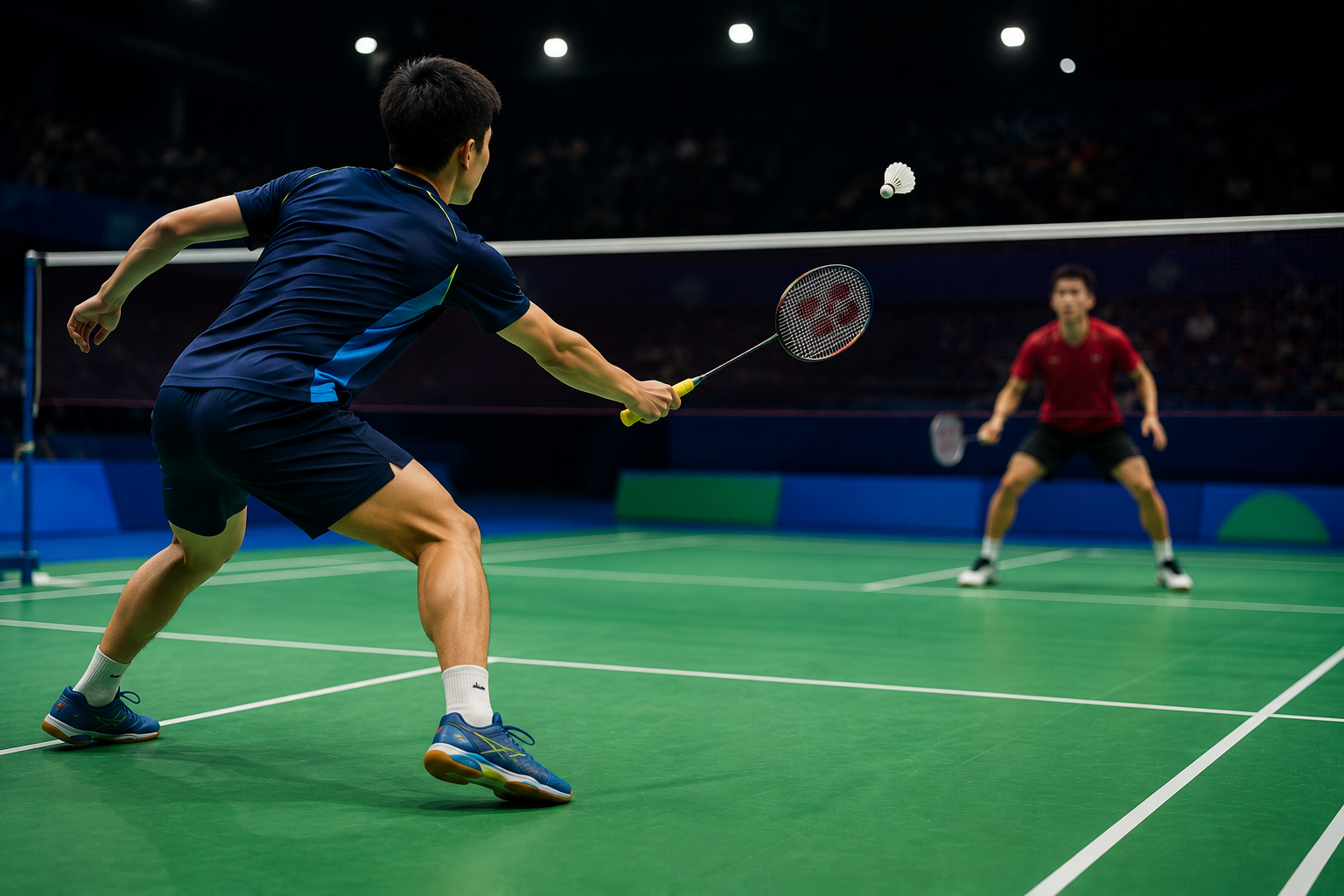
Badminton is a fast-paced racket game played with either one or two opponents. The racket is used to hit a shuttlecock over the net and attempt to get it into the opponent’s court. Although the game may seem easy, it is necessary to grasp the fundamentals of the play and the scoring system for all individuals seeking to play the game competitively.
If you are a new player or if you wish to know a little more about badminton, the rules explain the basics of the game, which will make it easier to follow and play.
The Basics of the Game of Badminton
Badminton can be singles (1 player per side) or doubles (2 players per side). The aim is to play the shuttlecock over the net and into the opposition’s court.
A rally starts with a serve. Then each player takes another shot at the shuttlecock till the shuttlecock touches the wall or if there is a fault.
The rally is won by a player or team if the opposing team fails to return the shuttlecock correctly or makes a fault.
Badminton Court and Equipment
A badminton game is played on a rectangular court which is divided by a net.
Players play with lightweight rackets and a shuttlecock (often made of feathers or synthetic material).
The court markings are different for singles and doubles. During most rallies, the narrow side boundaries are used by singles, and the wide side boundaries are used by doubles.
Players should also wear suitable sports shoes that provide grip and support for quick movements.
Badminton Scoring Rules and how they are used
The rally-point scoring system is used in modern badminton. This means a point is given after each rally, regardless of who or which team is serving.
In a normal game of badminton, the game is played to 21 points.
Each player or team must score a minimum of 2 points. If the score is tied (20-20), then the game continues until the first side has a two-point lead.
But when the score is tied at 29, the winner of the next rally wins the game at 30.
How many Games are played?
In a typical match of badminton, the game is played as best of three games.
The first player/team to win two games wins the match.
For instance, if Player A has won the first two games, then the third game is not necessary. A third game decides the victor if there is a tie after two games.
Badminton Serving Rules
All rallies begin with a serve. The server is to serve diagonally into the opponent’s designated service court.
SERVE – The server and receiver should stay in their own service courts until the shuttlecock is served.
The serve must be performed in accordance with the official service rules. A fault on a serve is awarded to the other team.
Next to the score, a player writes the serving side; this changes after each rally.
Singles vs. Doubles Rules
Singles and doubles are played using the same scoring system, but with some differences in court use and positioning.
Singles
One player per side in singles matches. The court is smaller than the doubles court during rallies.
Players must possess good movement, stamina, and shot accuracy as they have to move around the court by themselves.
Doubles
Doubles games are played with 2 players on each team. The wider court is used during rallies.
Communication and teamwork are extremely important in doubles. Players must be able to communicate with each other and move quickly in response to their opponents.
Common Badminton Faults
Common examples include:
- Play that the shuttlecock touches outside the lines of the court
- If the shuttlecock does not return over the net
- Taking more than one hit with the shuttlecock before returning it
- Playing into the net using the racket or body
- Serving incorrectly
- Serving a shot into the net before the shuttle crosses the net
- Playing with distraction or deliberate obstruction of an opponent
If the player commits a fault, the other player/team scores a point and takes the ball/baton.
Important Badminton Techniques
Knowing the rules is one aspect of improving at badminton. Players also have to learn fundamental skills.
Serve
Pressure can be placed on the opponent from the start of a rally with a good serve. Players may employ various sorts of serves in various scenarios.
Clear
A clear means to send the shuttlecock high and deep to the back of the opponent’s court. It can provide a player with additional time to recover from his position.
Drop Shot
A drop shot is a shot played softly, and the shuttlecock rests near the net on the opposite side.
Smash
The smash is one of the most aggressive badminton shots. It is hit with speed and power towards the opponent’s court, making it harder for the opponent to return.
Drive
A shot with little elevation change and speed. Most valuable in doubles for rapid reactions.
Tips for Beginners
A new player can build up his/her skill in badminton by learning basic skills first and then advanced skills.
- Memorize the court lines
- Regularly practice serving
- Develop footwork
- Don’t put down your racket when you are playing in a rally
- Be sure to watch the shuttlecock
- Do various types of shots
- Enhance stamina and agility
- Know when to defend and when to attack
- Communicate with your partner in doubles games
With regular practice, you can build up timing, movement, accuracy, and confidence.
Final Thoughts
Whether playing badminton or simply interested in the game, it is vital to know the rules and how the game is scored. Every rally counts in the rally-point system, and games are competitive and quick in a 21-point format.
After beginners have grasped serving, court boundaries, faults, and singles and doubles rules, they can concentrate more on developing their technique and strategy. As players practice and get their footwork right, they will slowly build up their abilities to play better on the badminton court.
FAQs
1. How many points are needed to win a badminton game?
The default game play in badminton is to the 21st point. When the score goes to 20–20, a player or team must have a two-point lead to win.
2. How many games are played in badminton?
Typically, a standard match consists of the best of three games. The player/team with two victories wins the match.
3. In Badminton, what is the consequence of being at 20:20?
If it comes to a tie at 20–20, the game is played on until one side scores a 2-point lead. For scores of 29–29, the winner will be determined by the next point.
4. What is a badminton fault?
A fault is defined as a violation of the rules by a player, such as hitting the shuttle out of play, serving the shuttle out of play, or touching the net while the shuttle is in play.
5. What is the best age to start playing badminton?
Yes. Badminton can be played by beginners and is good for improving coordination, agility, speed, and fitness. Players can begin with simple serves, footwork, and shots, and progress to more complex skills.